
Continuous Volumetric Stockpile Cubing and Bulk Material Telemetry without Ground Scale Infrastructure
Track ore/grain inventories, stacker/reclaimer operational hours, and conveyor belt profiles in real time.
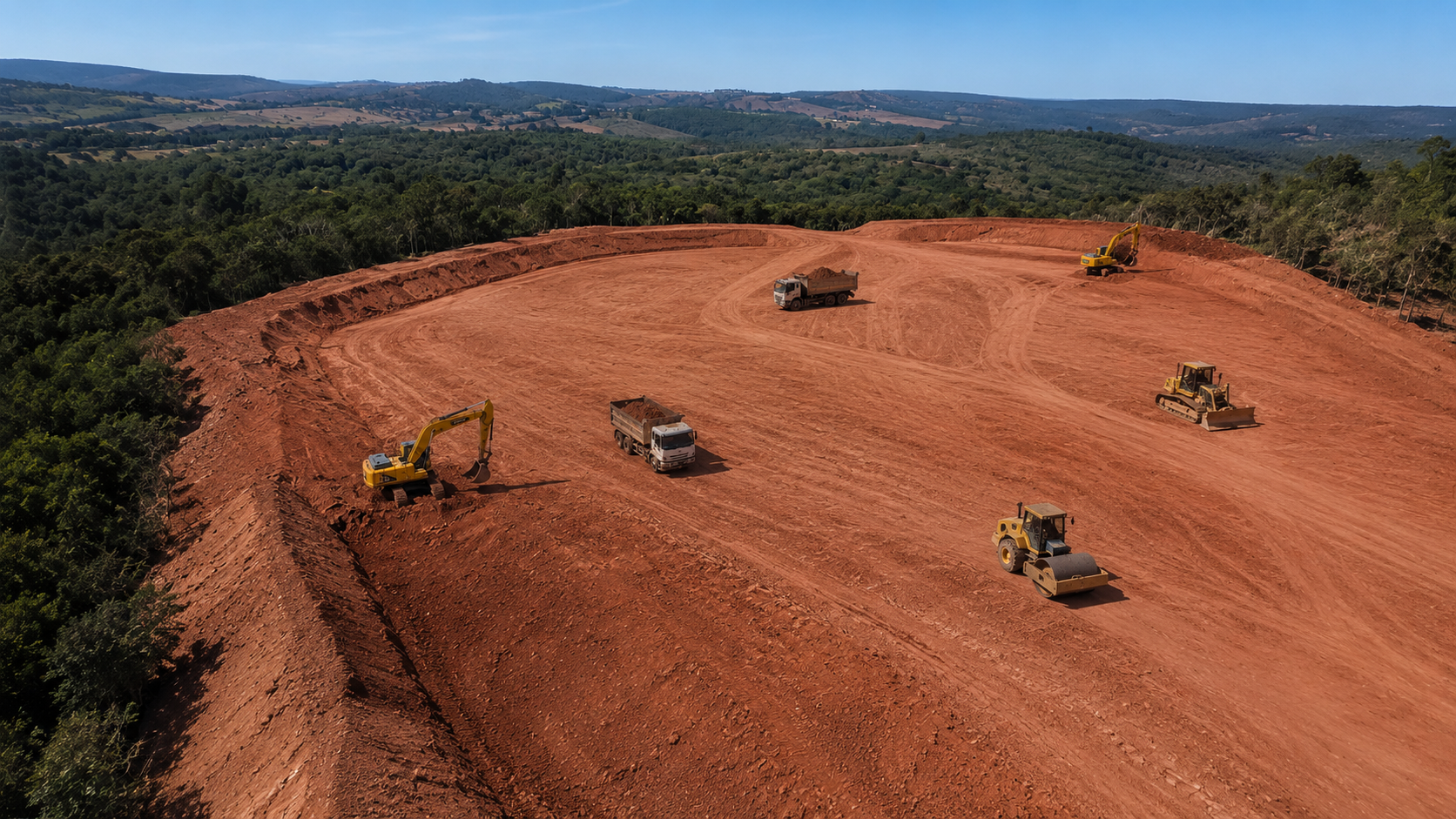
The hidden costs of static weighbridges and manual stock surveys
Relying on physical ground scales and infrequent land surveys leads to queuing, logistical bottlenecks, and multi-thousand-ton inventory accounting discrepancies.
Bottlenecks and long queues at truck weighbridges
Static weighing halts trucks, spikes fuel burn, and creates severe discrepancies between field transport and actual plant inventory.
Expensive, delayed periodic drone surveys
Topographical drone surveys performed only every 15 to 30 days leave plant managers blind to daily inventory swings.
Lack of visibility over conveyor efficiency
Zero telemetry regarding conveyor empty-running time, belt load profiles in mm, and actual stacker/reclaimer availability.
Optical Cubing, Stacker Tracking & Conveyor Telemetry
Computer vision and wireless IoT sensors auditing the end-to-end bulk materials handling logistics.
Module A: Stockyard & Stockpile Volumetric Cubing
Continuous 3D geometric reconstruction and volume calculation for bulk material piles via optical cameras.
- Millimeter-accurate 24/7 optical cubing without interrupting stacking or reclaiming operations.
- Stockpile geometry tracking, cubic meters (m³) volume, and estimated tonnage (t).
- Continuous density correlation and historical depletion logs per shipment front.
Module B: Stacker & Reclaimer Fleet Telemetry
Autonomous equipment tracking utilizing wireless IoT sensors and spatial positioning.
- Real-time positioning, operational elevation, and status for Stacker-1, Stacker-2, Reclaimer-1, etc.
- Tracking of effective operating hours, idle time, and slew/travel speed on the stockpile.
- 100% automated telemetry eliminating manual operator logbooks.
Module C: Conveyor Belt Telemetry
Continuous audit of belt material throughput, profile height, and electro-mechanical availability.
- Time classification: Loaded time vs Empty-running time vs Stopped time.
- Continuous utilization rate calculation (e.g. 96.9%) and estimated transported tonnage.
- Conveyor cross-sectional profile: max and average material height in mm with agitation threshold.
- Automated stoppage log with timestamp and root-cause classification.
Belt Cross-Section Profile & Stoppage Chronology
Comprehensive dashboard presenting transported m³, estimated tonnage, material bed thickness in millimeters, and downtime event logs.
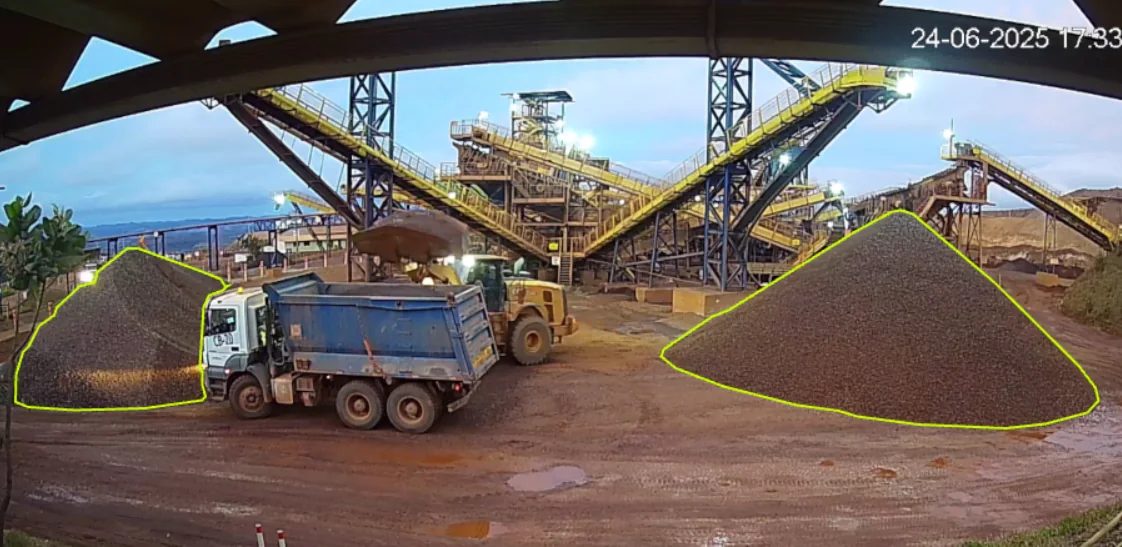
Volumetric algorithms field-verified against LiDAR laser scanners with an average variance under 2.5%.
Magnetic IoT Sensor for Yard Equipment
Heavy-duty neodymium snap-on magnetic installation on stackers, reclaimers, and conveyor pulleys.
Optikon Magnetic IoT Sensor
Direct magnetic mount on motors and conveyors with zero wiring
Captures temperature, triaxial vibration (m/s²), acoustic frequency, and active runtime with long-range telemetry transmission.
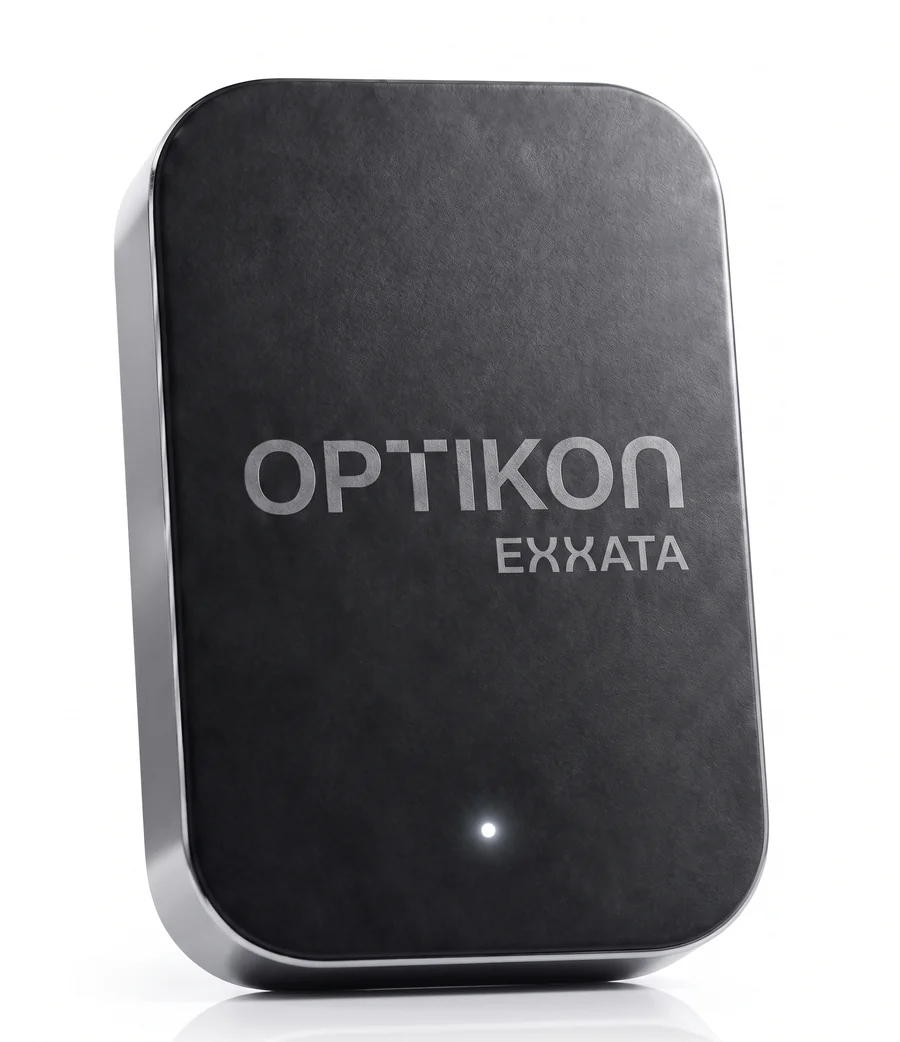
- Instant snap-on installation on bearing housings and reducers
- Early detection of idler roller misalignment and overheating
- Automated runtime telemetry feeding predictive maintenance schedules
Automated Daily Inventory Without Scales and 96.9% Conveyor Availability
Replacement of traditional truck sampling and monthly topographic surveys with continuous optical volume cubing and conveyor sensorization.
Operational Challenge
Monthly inventory discrepancies exceeded 15,000 tons, while trucks faced 45-minute weighbridge lines during ship loading operations.
Implemented Solution
Deployment of 3D computer vision measuring cross-sectional belt profiles on conveyor 8CCV01 alongside IoT sensors on stackers and reclaimers.
Field-Verified Results
- 100% elimination of weighbridge queues for intermediary inventory estimation.
- Inventory error margin slashed from 8.4% down to under 2.2%.
- Identification of 42 daily minutes of empty conveyor runtime, driving significant power savings.
- Automated inventory reports generated every 60 minutes for plant logistics dispatch.
All compliance and progress metrics were directly piped into monthly owner billing and progress acceptance logs.
Frequently Asked Questions about Stockyard Management
Does optical cubing operate during the night?
Yes. Our high-resolution cameras utilize high-powered infrared illuminators or leverage existing stockyard high-mast floodlights.
How is tonnage (t) calculated from volume (m³)?
The system calibrates geometric volume against the bulk material apparent density configured for each ore batch, generating an auditable tonnage log.
Are civil ground works required to install cameras?
No. Cameras mount on existing lighting masts, transfer towers, or Optikon autonomous solar poles without trenching.
Schedule a complimentary operational assessment
Connect our engineering team to your operations. We assess camera viability, AI parameters, and deployment scenarios for Stockyard Management.
Request Proposal & Technical Pilot
Fill in your company details to receive a technical response within 2 business hours.
OPTIKON ECOSYSTEM
Explore Related Solutions & Sectors
People Management & Safety
Real-time PPE compliance, unsafe acts mitigation, and crew productivity.
Administration & Security
Spatial intelligence, CCTV facial recognition, and license plate recognition.
Industrial Solutions
Chute clogging prevention and wireless industrial magnetic IoT sensors.